

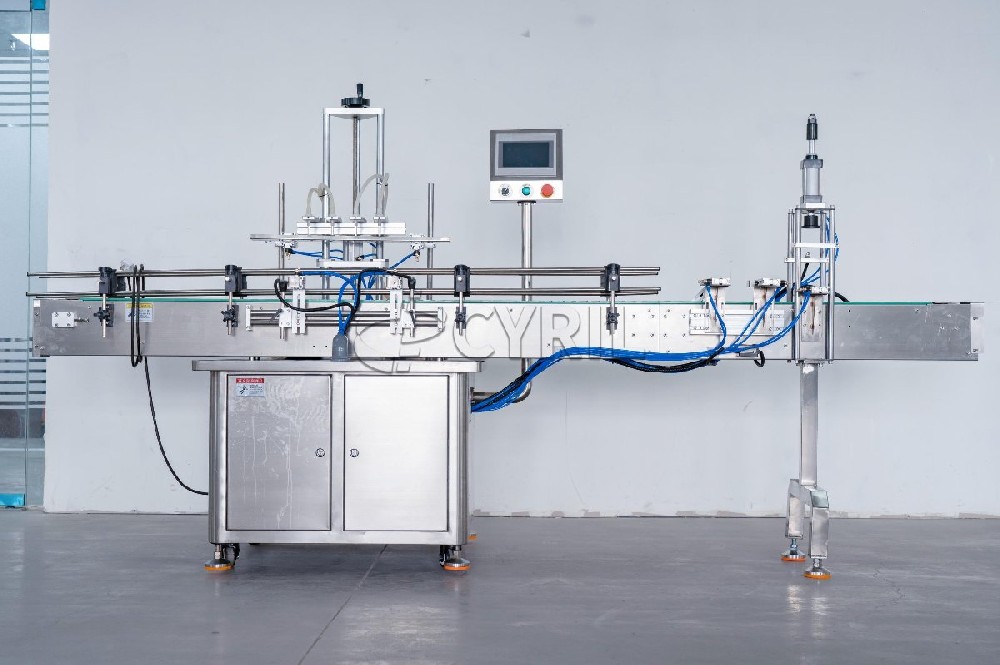
Design and Application of Filling Machines for Different Liquids
As the core equipment on packaging production lines, filling machines must be designed with full consideration of the characteristics of different liquids to ensure efficient and stable filling processes. The following discusses how filling machines adapt to different liquids from multiple perspectives.
I. Understanding Liquid Characteristics
Physical Properties: Viscosity, density, and surface tension affect filling performance. High-viscosity liquids (e.g., syrup) flow slowly, while low-viscosity liquids (e.g., water) are prone to splashing.
Chemical Properties: Corrosiveness, flammability, etc., require special materials (e.g., stainless steel) or safety protection devices.
Flow Characteristics: Foaming and volatility require special designs such as anti-foam devices and sealed systems.
II. Adaptive Design
Modular Design: Flexible configuration of different functional modules, such as changing filling nozzles or adjusting pipeline layouts.
Adjustable Parameters: Adjustable flow rate, pressure, temperature, etc., for precise control.
Material Selection: Choose appropriate materials based on chemical properties — stainless steel for corrosive liquids, food-grade materials for food-safe liquids.
III. Key Technical Measures
Precision Metering Technology: Use high-precision flow meters and load cells, combined with control systems for dynamic compensation.
Anti-Drip Technology: Design anti-drip filling nozzles with retractable or cut-off structures to prevent dripping.
Cleaning and Maintenance: Design easy-to-clean structures and equip with CIP or SIP systems to ensure hygiene and safety.
IV. Intelligence and Automation
Intelligent Recognition: Use sensors and machine vision to automatically identify liquid types and adjust filling parameters.
Automated Control: Achieve automated monitoring and adjustment through PLC and touch screens, improving efficiency and stability.
Data Analysis and Optimization: Collect and analyze data to continuously improve processes and performance.
V. Safety and Environmental Protection
Safety Protection: Equip with explosion-proof devices, leak detection systems, and emergency stops for hazardous liquids.
Environmental Design: Use energy-efficient motors, reduce waste, and minimize energy consumption and pollution.
Conclusion
Through modular design, adjustable parameters, precision metering, anti-drip technology, intelligent control, and safety/environmental measures, filling machines effectively meet the needs of different liquids, improving efficiency and quality while reducing costs and risks. In the future, they will continue to evolve toward greater intelligence, efficiency, and environmental friendliness.